If you’re looking for a helpful, simple, and thoroughly Bible-based tool for how to make disciples in the church, One-to-One Bible Reading by David Helm is a great option. It’s only 12.99 on Amazon at the time of writing this post.
OVERVIEW
At just over 100 pages, this book is a practical guide for believers who want to disciple others.
Helm opens in chapter one with a brief description of people we all know: the non-believer, the new believer, and the mature believer. Helm wants the reader to envision these categories because these are the people God has placed in our lives. The opening statement of chapter two says, “Reading one to one is a variation on the most central Christian activity – reading the Bible – but done in the context of reading with someone.” In chapter three, Helm takes two short pages to drive home the point that the Word of God is powerful to save the unconverted, sanctify the believer, and train the aspiring leader. We should be using the Bible as the central piece of all our discipling.
The remainder of Part One (chapters 4-7) finishes up the “what, why, and how” of the book. Helm assists the reader in how to initiate an invitation to read the Bible with someone, what the meetings should look like, how the parties might prepare, and some advice from his personal experience. All of this is easy to understand and apply.

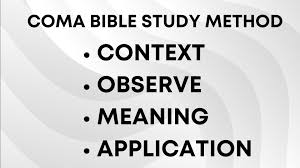
Chapter eight is where it gets fun. Helm introduces readers to two frameworks for reading the Bible with someone. These are called, “The Swedish Method” and “The COMA Method”. Don’t worry…he explains. He wants readers of Scripture to learn how to get into the text, and “start mining its riches.” That’s what both methods are for. Although the Swedish method is a bit simpler than the COMA, both are good, especially for those who are newer to reading Scripture.
With only a Bible, a pen, and a journal, anyone can learn these methods, and over time, become accustomed to context, observing important details, recognizing meaning, connecting it to other Scriptures and walking away with solid Gospel-application.
Chapter nine is a flyover of the Bible’s ability to address a variety of circumstances and situations. It is helpful to know how one particular book of the Bible could be more appropriate than another, depending on the place and time in a persons life. Referring back to the three categories of people mentioned in chapter one and three, Helm makes a three good suggestions.
- The Non-Believer
Reading any of the gospels will introduce a person quickly to the life and work of Jesus. May they find the truth, believe, and be saved. Reading Genesis with a non-believer will give the discipler an opportunity to lay a foundation for truth, as well as talk about many of the major themes of the Bible.
2. The New Believer
Helm suggests Colossians, Philippians, Titus, and 1st John. These are shorter books, but are rich with encouragement to grow and continue in the faith. Most of them were written to people who had not been Christians for very long either.
3. The Established Christian
Here, he recommends Romans, Psalms, and Micah, and makes a solid case for each. He suggests that Christians should be able to read the Bible and learn to “drink deeply from the book”. This is what Christians should be doing, drinking deeply, seeing Christ in the text, repenting, confessing, believing, and growing. When one has not yet learned to do this on their own, it might be better with a friend.
The final chapters of the book are highly practical, even more so than Part One. You’ll find a crash course in Biblical genres, and how genre should be read and interpreted differently. This is not seminary level hermeneutics. It’s the basics. Helm provides sample studies using the COMA and Swedish methods, and breaks down how one might approach the Word depending on the genre being read. The book closes with a sample study through the gospel of Mark, complete with questions to use over an eight week period of meeting together.
MY EXPERIENCE
We started recommending this book to all of our members back in 2021. We keep our connect station stocked with plenty to give away at no cost. It’s easy to read, easy to comprehend, and the best part is that it’s reproducible. If you love studying the Word, believe in multiplication, and have the conviction that helping others grow in Christ is imperative, then you should buy and utilize this tool today.
I have personally used this book as an aid in discipling several men in our church. Some were young Christians. Some were older. Some are aspiring to leadership. I can personally attest to the simplicity and reproducibility of what Helm so practically lays out in this book.
RECOMMENDATION
I recommend One-to-One Bible Reading (<<<<order here) as a tool for discipling and making disciples. Pastors should get their hands on enough copies to give out to their members, design and offer training courses, and then model it. If more churches got back to these methods, Christians would be more literate, less worldly, and more like Christ. That’s the power of God’s Word in discipleship.
If you’re looking for a helpful, simple, and thoroughly Bible-based tool for discipleship in the church, I recommend this book.
Did you find this article helpful? Consider sharing it with a friend, and SUBSCRIBE to this blog using your email below.

 Joel Littlefield
Leave a comment